

By Pius Awunah
The House of Representatives and stakeholders in Nigeria’s aviation sector have endorsed a proposed legislation to establish the African Aviation and Aerospace University (AAAU) in Abuja, describing the move as a landmark initiative to address the manpower deficit in the aviation and aerospace industry across Africa.
The endorsement followed a public hearing organised by the House Committee on Aviation Technology on Wednesday, October 15, 2025, where experts from government, academia, and the private sector highlighted the university’s potential to transform Nigeria into a continental hub for aviation research, innovation, and training.
The Minister of Aviation and Aerospace Development, Festus Keyamo,who was represented by the ministry’s Permanent Secretary, Dr. Ibrahim Abubakar said the creation of AAAU aligns with the ministry’s long-term vision to position Nigeria as a global aviation training center.
“The African Aviation and Aerospace University represents more than an educational institution—it is the future of aviation manpower development on the continent”,the minister said and commended the National Assembly for its foresight in institutionalising the project.
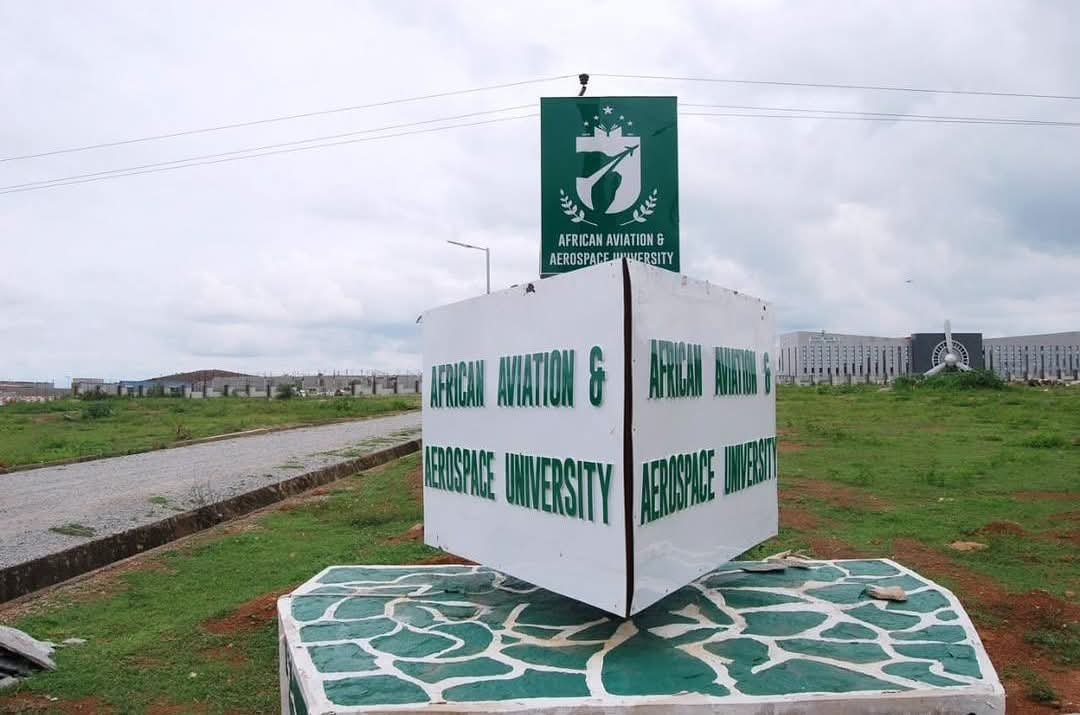
The Chairman of the University’s Governing Council,Alhaji Bukar Goni Aji disclosed that the Federal Government had allocated 200 hectares of land along Bill Clinton Drive, Abuja, as the university’s permanent site, with several structures already completed and relocation underway.
He stressed that passing the Bill would strengthen the university’s credentials, attract global partnerships, and ensure sustainable funding.
“It will also help Nigeria achieve its vision of becoming Africa’s leading aviation training and innovation hub,” Aji stated.
The university’s Registrar, Dr. Mustapha Sheik Abdullahi said AAAU had secured approvals from the National Universities Commission (NUC) and the Joint Admissions and Matriculation Board (JAMB).
He said the university currently runs seven accredited undergraduate and postgraduate programmes, with the first postgraduate students set to graduate this year.
He noted that AAAU had trained over 300 personnel from the Nigerian Civil Aviation Authority (NCAA), Nigerian Airspace Management Agency (NAMA), and Nigerian Safety Investigation Bureau (NSIB) through executive capacity-building programmes.
“Our support for this Bill is total. It will enable us to expand our reach, attract global collaborations, and meet Africa’s aviation manpower needs,” Abdullahi said.
The Rector of the Nigerian College of Aviation Technology (NCAT), Captain Danjuma Ismail described AAAU as complementary to NCAT’s work, noting that while NCAT provides technical and pilot training, AAAU will focus on advanced academic research and innovation.
“Many aviation professionals lack access to postgraduate qualifications. The new university will provide that pathway,” he said and urged lawmakers to fast-track the Bill’s passage.
Also,lending support to the proposed legislation ,the Chief of Air Staff (CAS),Air Marshal Hasan Bala Abubakar highlighted the strategic importance of AAAU in strengthening national security and advancing Nigeria’s leadership in aerospace technology.
Citing ICAO and Boeing’s 2024 forecast, he noted that Africa will require over 70,000 new aviation professionals between 2025 and 2044, including 23,000 pilots and 24,000 technicians.
“The establishment of AAAU is not just desirable—it is imperative. However, it must instill discipline, safety, and professionalism to produce globally competitive graduates,” he said.
The House Committee on Aviation Technology, Hon. Tajudeen Abisodun described Bill as a “historic opportunity” for Nigeria to lead Africa in aviation education and research.
“This university is not just for Nigeria; it is for Africa.
“It is a bold statement that we are ready to lead, innovate, and educate at the highest levels,” Abisodun declared.
Declaring open,the hearing earlier, Speaker of the House of Representatives, Rt. Hon. Tajudeen Abbas described the initiative as transformative for Nigeria’s aviation landscape.
“This university will equip Nigerians with advanced skills, reduce foreign dependence, and encourage research that drives innovation and safety.
“It positions Nigeria as Africa’s aviation and aerospace hub,” he said.