

By Pius Awunah
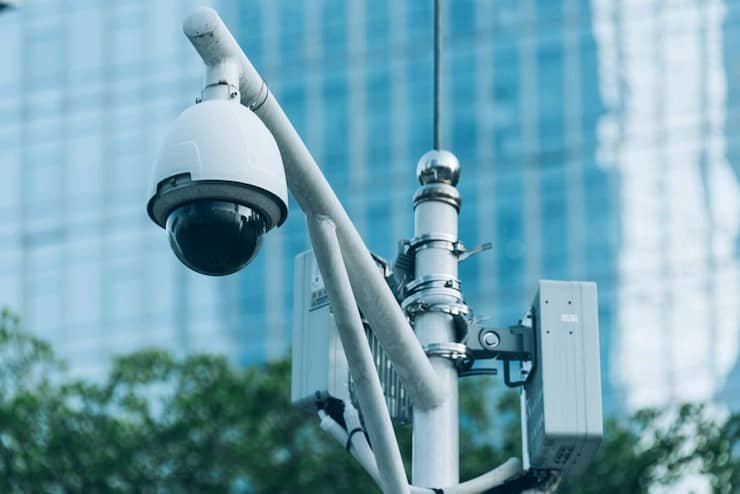
The House of Representatives has resolved to investigate the $460 million closed-circuit television (CCTV) project awarded to a Chinese firm for surveillance in Abuja, amid complaints that the system has remained non-functional despite Nigeria servicing the loan obtained for it.
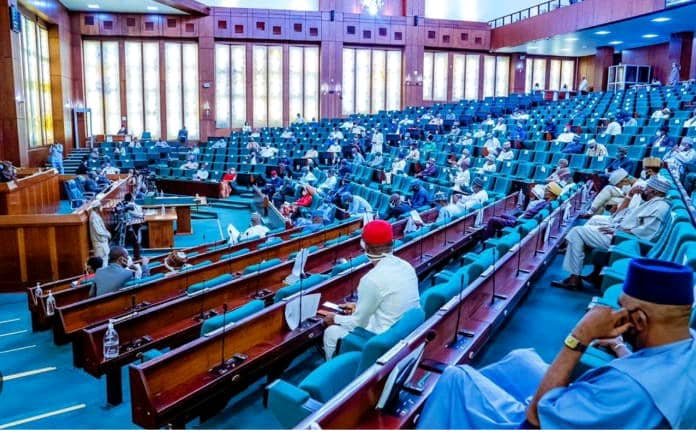
This followed a motion of urgent national importance that was moved on Wednesday,October 22,2025, by Amobi Ogah (LP, Abia) during plenary, where the lawmakers decried the continuous repayment of the loan obtained for the abandoned security infrastructure.
Presenting the motion,Ogah reminded the House that “the most important responsibility of any government is the protection of lives and property and the entrenchment of security to ensure good governance.”
He recalled that the administration of former President Goodluck Jonathan, “acting in good conscience,” initiated the CCTV project to curb insecurity in the nation’s capital by installing surveillance cameras at strategic locations.
He explained that in 2010, the then Minister of Finance, Olusegun Aganga, led a federal government delegation to Beijing, China, where a Memorandum of Understanding (MoU) was signed with Chinese telecommunications giant ZTE Corporation.
The contract, he said, was funded through a $460 million loan obtained from the China Exim Bank, drawn from a $600 million credit portfolio.
According to him, the facility, was a soft loan with a 10-year grace period and another 10 years for repayment at concessional interest rates.
Despite the massive financial commitment, the lawmaker noted that the CCTV cameras are not functional, while Abuja continues to experience rising insecurity, including kidnappings and other violent crimes.
“The impact of the CCTV project is not felt in any manner, as crime rates have soared in Abuja despite this huge investment. The current situation where Nigeria is paying heavily for a non-functional contract leaves the country in a lose-lose nightmare,” he added.
He, therefore, urged the House to investigate the failed project and determine why it was not executed despite full loan disbursement.
The Abuja CCTV project was conceived in 2010 under the National Public Security Communications System (NPSCS) to enhance real-time security surveillance and response in the FCT.
The project, executed by ZTE Corporation, was expected to deploy over 2,000 cameras and communication infrastructure across the city.
However, more than a decade later, several reports, including previous legislative inquiries, have revealed that most of the cameras are non-functional, and there is little evidence of maintenance or operational management, despite ongoing loan repayments.
Contributing to the motion, Billy Osawaru (APC, Edo) commended the motion and said it reflected the legislature’s commitment to its oversight function.
“We are beginning to wake up to our responsibilities – lawmaking, representation, and oversight,” he said.
“If we carry out proper oversight, it will serve the Nigerian people. Motions like this are necessary to discourage others in public office from abusing their powers. This investigation must be encouraged and concluded swiftly.”
Similarly, Saidu Abdullahi (APC, Niger) noted that a similar probe had been conducted by the 9th Assembly and advised that the new investigation should build on existing findings.
“It would be wise if we look at what was done in the 9th Assembly before we take on a similar assignment in the 10th Assembly. I do not want us to get to a point where we have plenty of motions without any movement,” Abdullahi cautioned.
On his part, Ahmed Jaha (APC, Borno) described the situation as a gross misuse of taxpayers’ money and faulted the feasibility and planning behind the CCTV project.
“As I speak to you, these CCTV cameras do not even exist. I do not know what kind of feasibility study was done before installation. Criminals have even sabotaged the few that were erected because there was no provision for their security,” Jaha said.
He called for a comprehensive public hearing to unearth how the loan was utilised and why the infrastructure was never delivered.
“Nigeria is still suffering from the burden of repaying this debt. So, the call for an Ad Hoc Committee is appropriate. We must invite all stakeholders to ensure we find lasting solutions to this kind of wasteful spending,” he added.
Adopting the motion, the House resolved to set up an ad hoc committee to investigate the failed CCTV project, the utilisation of the $460 million China Exim Bank loan, and the roles played by government agencies and contractors involved.
Announcing the composition, Deputy Speaker Benjamin Kalu, who presided over the plenary, said a 21-member committee will conduct the investigation.
It will be chaired by Donald Ojogo (APC, Ondo), with Amobi Ogah (LP, Abia) as deputy chair.
Other members of the committee include Billy Osawaru (APC, Edo), Zachariah Nyampa (PDP, Adamawa), Burka Talba (APC, Borno), Ajang Alfred (APC, Plateau), Salman Idris (APC, Kogi), Adewela Hamid (APC, Lagos), Amadi Akarachi (APC, Imo), Joseph Bagudu (APC, Kaduna), and Aminu Balele (APC, Katsina).
Kalu said the remaining members will be named on another legislative day.
The committee is expected to report to the House with recommendations on how to recover funds or ensure accountability in the project’s implementation.